Fertility Lubricant: What to Use When Trying to Conceive


Fertility Lubricant: What to Use When Trying to Conceive
When you're trying to conceive, every detail matters — including the lubricant you use during intercourse. Most couples don't realise that standard commercial lubricants can significantly harm sperm, reducing motility and viability before sperm even has a chance to reach the egg. A fertility lubricant is specially formulated to avoid this problem, providing comfort and moisture without compromising sperm function.
This guide explains exactly what makes a lubricant fertility-safe, which popular products to avoid, the clinical evidence behind fertility lubricants, and why Conceive Plus stands apart as the leading choice for couples trying to conceive across Europe.
Why Standard Lubricants Are Harmful When Trying to Conceive
Research has consistently demonstrated that most commercially available lubricants are toxic to sperm. A landmark study published in Fertility and Sterility (2012) tested several common lubricant brands and found that exposure to standard water-based lubricants (including popular brands like K-Y Jelly and Astroglide) significantly reduced sperm motility and function compared to controls. In some cases, sperm motility was reduced by 60–100% within 30 minutes of exposure.
The damage occurs through several mechanisms:
pH imbalance: The vaginal environment maintains a pH between 3.8 and 4.5 during intercourse, which is inhospitable to bacteria. However, sperm require a pH of approximately 7.0–8.5 to survive and function. Most standard lubricants have a pH closer to 4.0–5.0, which is too acidic for sperm survival. Cervical fluid naturally buffers the environment toward sperm-friendly pH levels — a fertility lubricant must match this role.
Osmolality mismatch: Osmolality refers to the concentration of dissolved particles in a solution. Solutions that are significantly hyperosmolar (too concentrated) relative to sperm draw water out of sperm cells through osmosis, causing damage to the sperm membrane and reducing motility and viability. Many standard lubricants have osmolality values far above the physiological range of semen (280–380 mOsm/kg), making them harmful on contact.
Ingredients: Certain ingredients common in standard lubricants — including glycerine, propylene glycol, and some preservatives — have been shown to reduce sperm function. Glycerine, in particular, increases osmolality and creates an environment hostile to sperm.
What Makes a Fertility Lubricant Different
Join thousands of couples who've made Conceive Plus part of their fertility journey. Clinically formulated, science-backed, and designed for people just like you.
Shop Conceive Plus Now →
A true fertility lubricant is formulated to be:
- pH-balanced: Formulated to a pH of 7.0–7.5, matching the optimal environment for sperm function and cervical fluid
- Isotonic: Osmolality matched to the physiological range of semen and vaginal secretions (250–380 mOsm/kg)
- Sperm-compatible ingredients: Free from glycerine, parabens, and other compounds shown to impair sperm function
- Non-cytotoxic: Demonstrated in laboratory testing not to damage sperm DNA or membrane integrity
In the European market, fertility lubricants are typically classified as medical devices and must meet specific safety standards. Look for products that have undergone clinical testing for sperm compatibility and carry appropriate regulatory certification.
Conceive Plus: The Clinically Developed Fertility Lubricant
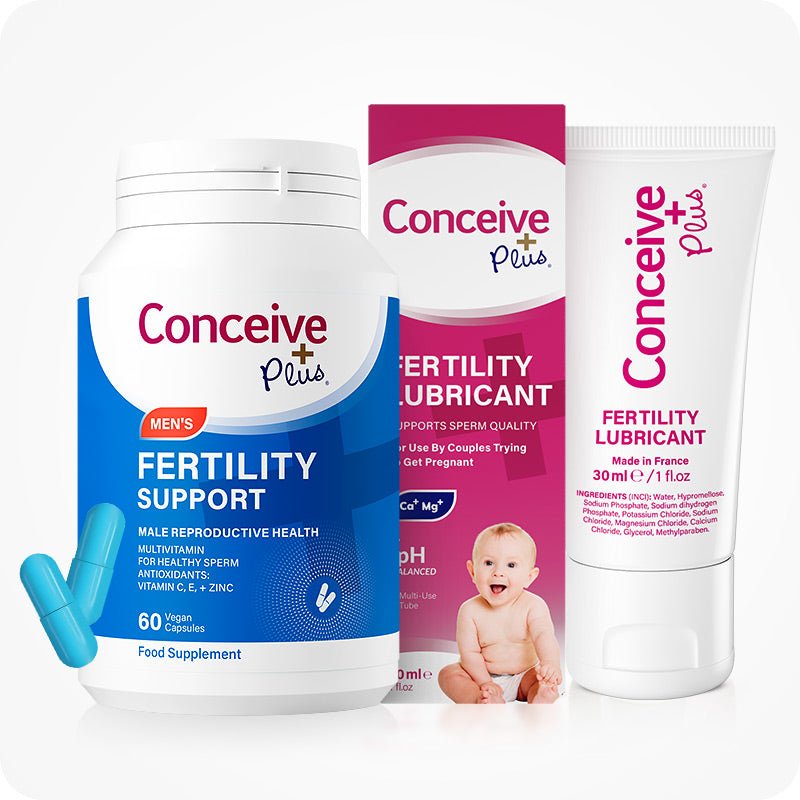
Conceive Plus is specifically formulated for couples trying to conceive, with a unique feature that sets it apart from other fertility lubricants: it contains calcium and magnesium ions.
These ions are naturally present in fertile cervical mucus and play a documented role in the capacitation process — the biochemical changes sperm undergo to become capable of fertilising an egg. Research published in Human Reproduction has confirmed that calcium and magnesium ions in the cervical fluid environment support healthy sperm function and are essential for the acrosome reaction (the step that allows sperm to penetrate an egg).
Conceive Plus is the only fertility lubricant on the market to incorporate these ions, mimicking the fertile cervical mucus environment rather than simply avoiding the harms of standard lubricants. This is a significant distinction:
- It doesn't just do no harm — it actively supports the sperm's journey
- It's pH-balanced to 7.0–7.5 (ideal for sperm function)
- It's isotonic (osmolality in the physiological range)
- It contains no glycerine, parabens, or other sperm-toxic ingredients
- It has been tested and confirmed safe for use by couples trying to conceive
- It's classified and approved as a fertility aid medical device in Europe
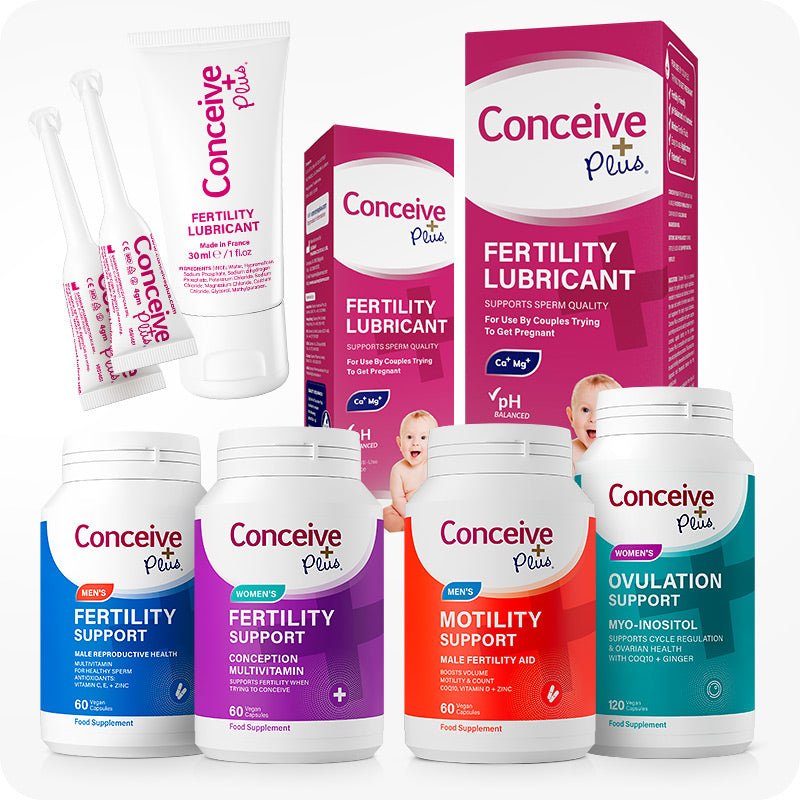
Conceive Plus is used and recommended by fertility clinics, gynaecologists, and reproductive health specialists across Europe and beyond. It's available in individual-use applicator pre-fills (convenient for timed intercourse) and tube format for regular use throughout your cycle.
Common Lubricants to Avoid When Trying to Conceive
The following lubricants have been shown in clinical studies to impair sperm function and should be avoided when you're trying to conceive:
K-Y Jelly: Significantly reduces sperm motility due to high osmolality and pH mismatch. Multiple studies confirm its incompatibility with sperm.
Astroglide: Similar issues to K-Y Jelly. Research showed near-complete immobilisation of sperm in laboratory conditions.
Coconut oil: While natural and free from synthetic chemicals, coconut oil is lipid-based and has been shown to reduce sperm motility and is associated with bacterial imbalance in the vaginal microbiome.
Saliva: Commonly used but demonstrably harmful to sperm. Saliva is hyperosmolar and contains enzymes that can immobilise sperm.
Olive oil and other cooking oils: Lipid-based, unpredictable pH, and associated with disruption of vaginal flora. Not appropriate for TTC use.
Most "natural" or "organic" lubricants: Natural ingredients don't automatically mean sperm-safe. Check pH, osmolality, and that the product has been clinically tested for sperm compatibility before using during TTC.
When to Use a Fertility Lubricant
A fertility lubricant is most beneficial in these situations:
Vaginal dryness: Vaginal dryness is common and can be caused by hormonal fluctuations, stress, certain medications, and simply the frequency of intercourse during TTC. It affects both comfort and the availability of natural cervical mucus to support sperm. A fertility lubricant directly addresses this.
Timing intercourse around ovulation: Sex may feel more pressured or less spontaneous around your fertile window, which can affect natural lubrication. A fertility lubricant removes this concern and maintains a sperm-supportive environment regardless of natural moisture levels.
Reduced cervical mucus: Some women produce less fertile-quality cervical mucus due to hormonal factors, previous cervical procedures (LEEP, cone biopsy), antihistamine use, or other factors. A fertility lubricant supplements and supports the natural CM environment.
Assisted conception: Fertility clinics performing IUI commonly recommend fertility-safe lubricants for use during home insemination cycles. Always check with your clinic for their specific recommendations.
How to Use Conceive Plus Fertility Lubricant
For best results with Conceive Plus:
- Apply shortly before intercourse — no specific waiting time required
- The pre-filled applicator format delivers lubricant internally for maximum coverage
- The tube format can be used externally and internally as preferred
- Safe to use throughout your cycle, not only around ovulation
- Compatible with condoms (if used for semen collection or other purposes)
- No rinsing required after use
Conceive Plus is formulated with calcium and magnesium ions that support sperm function — not just avoiding harm, but actively creating the optimal environment for conception.
Shop Conceive Plus Fertility Lubricant →
Frequently Asked Questions About Fertility Lubricants
Q: Is Conceive Plus safe to use throughout the month?
A: Yes. Conceive Plus is safe for daily use and is not limited to use only during your fertile window. Many couples use it throughout their cycle for comfort and consistency.
Q: Can a fertility lubricant increase my chances of getting pregnant?
A: By replacing sperm-harmful lubricants with a sperm-safe alternative, you remove a potential barrier to conception. The calcium and magnesium ions in Conceive Plus may provide additional support to sperm function. While a lubricant cannot guarantee pregnancy, it ensures lubrication is not a factor working against you.
Q: Is Conceive Plus available without a prescription in Europe?
A: Yes. Conceive Plus is available over the counter online and in many pharmacies across Europe without a prescription.
Q: Can I use Conceive Plus with ovulation predictor kits?
A: Yes. Conceive Plus doesn't interfere with OPK testing. Apply lubricant for intercourse as usual and test your urine separately.
Q: Does Conceive Plus contain hormones?
A: No. Conceive Plus contains no hormones. It is a lubricant formulated with calcium and magnesium ions and does not interact with your hormonal cycle.
Q: What is the difference between Conceive Plus tube and applicators?
A: The pre-filled applicators deliver lubricant internally and are particularly convenient for around-ovulation use. The tube format is more economical for regular use throughout your cycle and can be applied both internally and externally.
Q: Is Conceive Plus safe for IUI?
A: Conceive Plus is used by fertility clinics and has been tested for sperm compatibility. However, always check with your specific clinic regarding their lubricant policy during IUI cycles, as some prefer no lubricant at all during the actual procedure.
Q: Can Conceive Plus replace cervical mucus?
A: Conceive Plus mimics the key properties of fertile cervical mucus (pH, osmolality, ionic composition) and is designed to supplement or substitute when natural CM is insufficient. It does not replicate all CM functions but provides the critical sperm-supportive environment.
Conceive Plus fertility lubricant is trusted by thousands of couples across Europe. Available in tube and applicator formats.
Get Conceive Plus Today →
This article is for informational purposes only. Always consult with a healthcare professional for personalised fertility advice.