Fertility Lubricants: Why Your Choice of Lubricant Matters When Trying to Conceive


When couples are trying to conceive, they often focus on timing, ovulation tracking, diet, and supplements — all important factors. But one aspect that is frequently overlooked is the lubricant they use during intercourse. For many couples, particularly those who have been trying for a while or who experience vaginal dryness, lubricants are a routine part of intimate life. What most couples do not realise is that many conventional personal lubricants are actively harmful to sperm — and can significantly reduce the chances of conception in any given cycle. This article explains the science behind fertility-friendly lubricants, what to look for, and how making the right choice can support your conception journey.
How Regular Lubricants Can Harm Sperm
The concern about lubricants and fertility is not new. As far back as 1996, laboratory studies began demonstrating that commonly used personal lubricants were harmful to sperm. Since then, a substantial body of research has confirmed that most conventional lubricants — including some that are marketed as "natural" or "gentle" — have measurable negative effects on sperm motility, viability, and DNA integrity.
The mechanisms of harm are several. First, most personal lubricants are formulated with a pH that is optimal for vaginal comfort in non-fertile conditions — typically between 4 and 5. However, sperm require a pH of approximately 7–8.5 to survive and swim effectively. When sperm encounter an acidic environment (typical of most lubricants), their swimming ability is rapidly impaired, and cell death follows within minutes to hours.
Second, osmolality — the concentration of dissolved particles in a solution — matters enormously. Sperm function optimally at an osmolality of approximately 280–380 mOsm/kg. Many lubricants have osmolalities far outside this range. High osmolality causes the cells to lose water rapidly through osmosis, impairing function and causing cellular damage. Low osmolality causes cells to absorb water and swell, also impairing function. A 2014 study published in Fertility and Sterility found that many commercially available lubricants had osmolalities from 2,000 to over 9,000 mOsm/kg — vastly higher than the sperm-safe range.
Third, the viscosity and base material of some lubricants create a physical barrier. Very thick lubricants can impede sperm movement mechanically, trapping sperm and preventing them from swimming toward the cervix. Petroleum-based lubricants can disrupt sperm cell membranes.
A landmark study by Anderson et al. (2014), published in Fertility and Sterility, tested a range of commercially available lubricants and found that most caused significant reductions in sperm motility and viability within 30 minutes of exposure. Some lubricants reduced motility by more than 60% in that timeframe. Even lubricants labelled "natural" or containing "aloe vera" showed substantial toxicity to sperm in laboratory conditions.
The Science of Fertile Cervical Fluid
Try the #1 Fertility-Friendly Lubricant
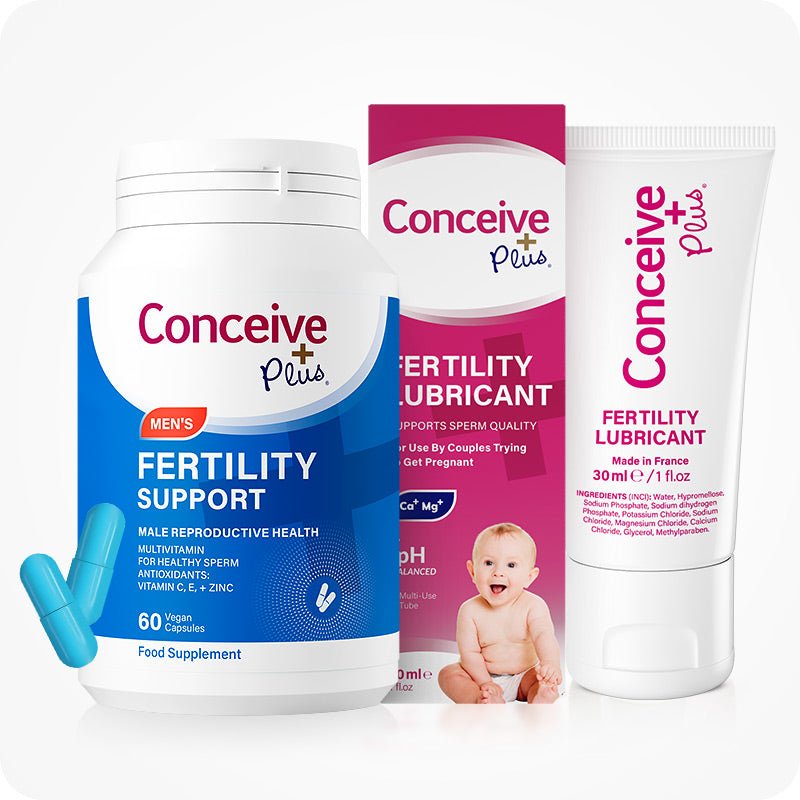
Conceive Plus Fertility Lubricant is clinically tested to be safe for sperm, eggs, and embryos. Formulated with a pH and osmolality that matches fertile cervical fluid — so it works with your body, not against it.
To understand what a fertility-friendly lubricant needs to achieve, it helps to understand what naturally supports sperm survival in the female reproductive tract. In the days approaching ovulation, under the influence of rising oestrogen, the cervix produces a specific type of mucus — fertile cervical mucus — that is dramatically different from the thick, hostile mucus produced at other times in the cycle.
Fertile cervical mucus (often described as having the consistency of raw egg white) has several remarkable properties. Its pH is alkaline (approximately 7.2–8.0) — creating a sperm-friendly environment that contrasts with the normally acidic vagina. Its osmolality is within the sperm-optimal range of 280–380 mOsm/kg. Its molecular structure forms channels that align in the direction of the uterus, providing tracks along which sperm can swim efficiently. It also selects for healthy, motile sperm — trapping and filtering out abnormal or non-motile sperm.
This is why conception is most likely to occur during the fertile window — not just because of ovulation timing, but because the cervical environment is fundamentally transformed to support sperm. Outside the fertile window, the thick, acidic cervical mucus forms a barrier to sperm penetration.
A truly fertility-friendly lubricant should mimic this fertile cervical mucus environment as closely as possible — matching its pH, osmolality, and viscosity — while providing effective lubrication without introducing toxins or compounds that harm sperm cells.
What Makes a Lubricant Fertility-Friendly?
A fertility-friendly lubricant must meet specific criteria, validated through laboratory and clinical testing. The key parameters are:
pH: The lubricant should have a pH in the range of 7–8.5 — matching the alkaline environment of fertile cervical mucus and the optimal environment for sperm function. This is very different from most conventional lubricants, which are formulated at pH 4–5 for general vaginal comfort.
Osmolality: Should be within 200–400 mOsm/kg — close to the sperm-optimal range and similar to fertile cervical fluid. This prevents osmotic damage to sperm cells.
Sperm motility preservation: Should be tested in laboratory conditions to demonstrate that it does not impair sperm motility or viability. Ideally, this testing should use standardised methods such as HTPC (hamster tubal perfusion curve analysis) or equivalent in vitro systems.
No spermicidal agents: Must not contain nonoxynol-9 or similar spermicidal compounds (common in contraceptive lubricants).
No parabens or harmful preservatives: Some preservatives used in personal lubricants have estrogenic or sperm-toxic properties.
Clinical safety testing: Ideally, the lubricant should have undergone clinical safety testing demonstrating it is safe for use with sperm, oocytes, and embryos — the WHO's (2012) guidance specifically identifies these requirements for fertility-safe lubricants.
The key base ingredient in most fertility-friendly lubricants is hydroxyethylcellulose (HEC) — a non-toxic, water-soluble polymer that provides a smooth, effective lubrication without the properties that make other lubricants sperm-toxic. HEC-based lubricants at appropriate pH and osmolality have been validated as the model for fertility-safe lubricants in WHO research on microbicide testing.
Hydroxyethylcellulose (HEC): The Gold Standard Base
Hydroxyethylcellulose has become the reference material for fertility-safe lubricants for good reasons. It is a cellulose derivative — derived from plant matter — that is inert, non-toxic, and biocompatible. Unlike glycerol-based or propylene glycol-based lubricants, HEC does not generate the hyperosmotic conditions that damage sperm. It does not disrupt cell membranes. It is not metabolised by vaginal bacteria in ways that could alter the vaginal environment harmfully.
In the WHO's bioassay protocol for microbicide testing, which is designed to test substances for use in the female reproductive tract without harming sperm, HEC at controlled pH and osmolality serves as the negative control — the substance known to be safe for sperm that other products are tested against. This is a meaningful validation.
The physical properties of HEC make it an excellent lubricant: it is sufficiently viscous to reduce friction without being so thick as to impede sperm movement. It spreads evenly and has a texture that feels natural. It is water-soluble and easy to clean. It is compatible with both latex and non-latex condoms (though condoms should obviously not be used when trying to conceive).
Some fertility lubricants also include calcium and magnesium ions in their formulation. These divalent cations are found naturally in fertile cervical mucus and have been shown to support sperm motility and capacitation — the process by which sperm undergo physiological changes that allow them to penetrate an egg. A lubricant that not only avoids harming sperm but actively provides an environment closer to natural fertile conditions represents a meaningful advancement over simply using nothing.
The Prevalence of Lubricant Use and Its Impact on Conception
Lubricant use during intercourse is more common than many people assume. A survey-based study of fertility patients found that approximately 25% reported using personal lubricants during the fertile window. Population surveys in multiple countries suggest that 40–60% of sexually active adults use lubricants at least occasionally.
The reasons for lubricant use when trying to conceive are understandable. Frequent intercourse — particularly when it is timed around ovulation and therefore feels more "scheduled" — can reduce natural arousal and natural lubrication. Anxiety about conception reduces sexual spontaneity. Some women naturally experience reduced vaginal lubrication at certain points in their cycle. Post-partum, post-pill, or post-breastfeeding, vaginal dryness is common. For all these reasons, couples trying to conceive frequently turn to lubricants — often without realising the potential impact.
The population-level impact is difficult to quantify precisely, because most couples are not asked about lubricant use in fertility assessments and lubricant use is not typically tracked as a variable in conception studies. However, a 2012 prospective study by Steiner et al. published in Obstetrics and Gynecology found no statistically significant impact of lubricant use on fecundability (the probability of conception per cycle) compared to non-users — but critically, only a minority of lubricant users in that study used lubricants during the fertile window. For couples using lubricants specifically at the time most likely for conception to occur, the laboratory evidence of sperm toxicity is a legitimate concern that warrants switching to a fertility-safe alternative.
Practical Guidance: Choosing and Using a Fertility-Friendly Lubricant
When selecting a lubricant to use while trying to conceive, look for the following:
- Specifically labelled as "fertility-friendly," "sperm-safe," or "for use when trying to conceive"
- HEC (hydroxyethylcellulose) as the primary lubricating agent
- pH in the range of 7–8.5 (should be stated on packaging or in product information)
- Osmolality in the range of 200–400 mOsm/kg
- Clinical testing demonstrating safety for sperm (not just "natural ingredients")
- Free from nonoxynol-9, parabens, and glycerol at high concentrations
- ISO 29943-2 compliance or equivalent certification for fertility-safe lubricants
Products to avoid include any lubricant containing nonoxynol-9 (a spermicide), petroleum-based products (like Vaseline), saliva (which can be spermicidal due to digestive enzymes), and most commercial lubricants not specifically designed and tested for fertility use.
From a practical standpoint: use only the amount needed for comfort — excess lubricant is not beneficial and may introduce more of the product into the vaginal environment. Use immediately before or during intercourse rather than long in advance. Store the product at room temperature and check the expiry date, as pH and osmolality can change as a product degrades.
Conceive Plus and the Standard for Fertility Lubricants
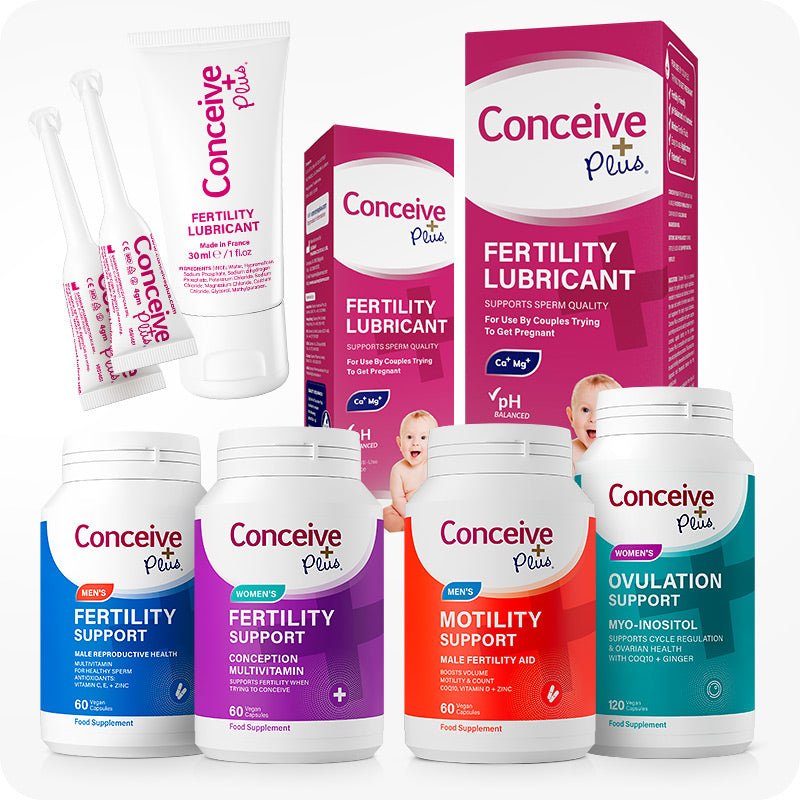
Conceive Plus was one of the first fertility lubricants to be specifically formulated and clinically tested to meet the criteria outlined above. Its formulation uses HEC as the primary base, with a pH and osmolality calibrated to match fertile cervical fluid. It has been tested to demonstrate that it does not impair sperm motility or viability in laboratory conditions. Its formulation includes calcium and magnesium ions — naturally present in fertile cervical mucus — to support a sperm-friendly environment.
Conceive Plus is the only personal lubricant cleared by the US FDA for use as a fertility aid, a distinction that requires substantive clinical and laboratory testing. It has been clinically evaluated in multiple studies and is recommended by healthcare professionals in fertility clinics globally. In Europe, it meets the requirements for a medical device.
The availability of Conceive Plus in single-use applicator format (pre-filled tubes for internal application) as well as a traditional tube format provides options depending on whether the primary goal is internal lubrication close to the cervix or general external comfort during intercourse. Single-use applicators deliver lubricant directly to the vagina before intercourse, mimicking the natural cervical mucus environment more closely.
Frequently Asked Questions About Fertility Lubricants
Does using a lubricant reduce my chances of getting pregnant?
It depends entirely on which lubricant you use. Most conventional personal lubricants — including many marketed as "natural," "gentle," or "water-based" — have been shown in laboratory studies to significantly reduce sperm motility and viability. If you use these products during the fertile window (around ovulation), they could reduce your chances of conception in that cycle. A lubricant specifically formulated and tested to be fertility-safe — with the correct pH, osmolality, and non-toxic ingredients — should not reduce your chances and may even provide a supportive environment for sperm. If you need a lubricant, choose one designed and verified for fertility use.
Is saliva a safe lubricant when trying to conceive?
No. Saliva is not a safe lubricant when trying to conceive. Saliva contains digestive enzymes, including amylase, that can damage sperm. It also has a pH and osmolality that can be hostile to sperm function. Several in vitro studies have shown that semen mixed with saliva shows significantly reduced motility within minutes. In addition, certain oral bacteria and antiviral agents in saliva may be harmful to sperm. Many healthcare professionals advise against using saliva as a lubricant at any point in the reproductive journey, and certainly not during the fertile window.
What about coconut oil or olive oil as natural lubricants?
Oil-based lubricants — including natural oils like coconut oil, olive oil, and almond oil — do not have the same extreme pH and osmolality problems as water-based conventional lubricants. However, they are not tested for fertility safety, may disrupt the vaginal microbiome (potentially altering the vaginal environment and increasing infection risk), and can break down latex condoms. Limited research suggests some oils may have spermicidal properties or may disrupt sperm membrane function. While occasionally used as a "natural" alternative, they are not a clinically validated fertility-safe option. A lubricant specifically formulated and tested for fertility use is preferable to any DIY alternative.
Does my partner's natural lubrication harm sperm?
Natural vaginal lubrication produced during arousal has a somewhat different composition to non-arousal vaginal secretions and to most commercial lubricants. While vaginal secretions are naturally acidic (pH 3.8–4.5) and potentially hostile to sperm, fertile cervical mucus produced around ovulation is alkaline and sperm-friendly. During the fertile window, the balance shifts toward a more hospitable environment. Natural arousal lubrication from the Bartholin's glands is relatively neutral and unlikely to be significantly harmful to sperm in the way commercial lubricants have been shown to be. The concern about lubricants applies specifically to added commercial products, not to natural physiological secretions.
How long should I use a fertility lubricant before expecting to see results?
A fertility-friendly lubricant is not a fertility treatment — it is a tool that ensures you are not inadvertently reducing your chances each cycle by using a sperm-toxic product. Its benefit is immediate (from the first cycle of use) and cycle-specific. There is no cumulative effect over time. If you have been using a conventional lubricant in previous conception cycles and were wondering whether it could be contributing to difficulty conceiving, switching to a fertility-safe product is a simple change worth making right away. If after several cycles of using a fertility lubricant (and optimising other fertility factors) you have not conceived, that is the signal to seek medical evaluation — not to keep trying with the same approach.
Can I use a fertility lubricant with IUI or IVF treatment?
During IUI (intrauterine insemination), sperm are processed in the laboratory and injected directly into the uterus, bypassing the vagina entirely. Lubricant use during the insemination procedure itself is therefore not relevant to sperm exposure. For IVF, eggs and sperm interact in the laboratory, so again, personal lubricant is not part of the process. However, some couples using fertility lubricants during natural conception cycles or timed intercourse cycles around IUI transfers may find them helpful for comfort. The key is to ensure any product used is certified as safe for use with reproductive cells. Discuss with your clinic if you are unsure.
Is there a best time to apply a fertility lubricant?
Fertility lubricants are typically applied immediately before or during intercourse. Single-use applicator formats can be inserted into the vagina a few minutes before intercourse to allow the product to distribute. Tube formats can be applied externally or internally. The goal is to provide lubrication during intercourse, when sperm will come into contact with the product. There is no clinical evidence supporting the use of fertility lubricants as a "treatment" at other times in the cycle. If the goal is optimising the environment for sperm, the focus should be on the period immediately around intercourse, not ongoing application throughout the day.
Are there any lubricants that can actually improve fertility?
The primary goal of a fertility lubricant is to be neutral — to provide effective lubrication without harming sperm. A lubricant that is truly "safe" for sperm preserves their motility and viability as they naturally would be in the absence of a lubricant. Some lubricants containing calcium and magnesium ions — nutrients found naturally in fertile cervical mucus — may provide a marginally more supportive environment for sperm. However, no lubricant can correct underlying fertility problems such as low sperm count, ovulation dysfunction, or tubal factors. Think of a fertility lubricant as removing an obstacle (sperm toxicity) rather than as adding a positive fertility treatment.
What is ISO 29943-2 and why does it matter for lubricants?
ISO 29943-2 is an international standard specifically developed to evaluate the compatibility of personal lubricants with reproductive health. Part 2 of this standard (published in 2017) focuses on fertility — specifically, providing test methods to assess whether a lubricant impairs sperm motility (using the HTPC — hamster tubal perfusion curve assay) and whether it is compatible with human eggs and embryos. Lubricants that comply with this standard have undergone validated laboratory testing demonstrating safety for use when trying to conceive. Looking for ISO 29943-2 compliance (or FDA clearance as a fertility aid, or CE marking as a medical device intended for fertility use) is the most reliable way to identify genuinely sperm-safe products beyond marketing claims alone.
My doctor said lubricants don't matter — should I be concerned?
Unfortunately, awareness of the research on lubricant spermiotoxicity is uneven among healthcare professionals, and many general practitioners are not familiar with the laboratory evidence on specific lubricants. The science is clear: most conventional lubricants impair sperm motility and viability in laboratory testing. Whether this translates to clinically significant reductions in per-cycle conception rates in the real world for all users is harder to quantify precisely in human studies (because many couples use lubricants only occasionally, or not during the fertile window). However, for couples who are actively using lubricants during fertile-window intercourse and struggling to conceive, it is a logical and low-cost intervention to switch to a validated fertility-safe product. The risk of using a fertility lubricant is essentially zero; the potential benefit is preservation of sperm quality during intercourse.
Try the #1 Fertility-Friendly Lubricant
Conceive Plus Fertility Lubricant is clinically tested to be safe for sperm, eggs, and embryos. Formulated with a pH and osmolality that matches fertile cervical fluid — so it works with your body, not against it.