PCOS and Fertility: What You Need to Know About Getting Pregnant with PCOS


PCOS and Fertility: What You Need to Know About Getting Pregnant with PCOS
Polycystic ovary syndrome (PCOS) is the most common hormonal disorder in women of reproductive age, affecting an estimated 8–13% of women globally. It is also the most common cause of anovulatory infertility—infertility caused by irregular or absent ovulation. Despite this, most women with PCOS who want to conceive will succeed with the right approach. Understanding how PCOS affects fertility, what treatments work, and how to optimise your chances is the first step.
This guide covers the diagnostic criteria for PCOS, how it disrupts the reproductive system, evidence-based lifestyle interventions, medical treatments, and how supplements like inositol fit into a comprehensive fertility plan for women with PCOS.
What Is PCOS and How Is It Diagnosed?
PCOS is a complex endocrine disorder characterised by a combination of features. It is diagnosed using the Rotterdam Criteria—you need at least 2 of the following 3 features:
- Irregular or absent ovulation: Cycles longer than 35 days, very unpredictable cycles, or fewer than 8 cycles per year
- Clinical or biochemical hyperandrogenism: Excess androgens (male hormones), evidenced by acne, hirsutism (excess hair growth on face or body), or elevated serum testosterone
- Polycystic ovarian morphology on ultrasound: 20 or more follicles (small egg-containing sacs) in at least one ovary, or an increased ovarian volume
It's important to note that having "polycystic ovaries" on ultrasound alone does not mean you have PCOS. Around 25% of women of reproductive age have this ultrasound finding without the hormonal or ovulatory disturbances that define the syndrome.
There are several recognised phenotypes of PCOS, from classic (all three features) to milder presentations. Treatment and prognosis differ somewhat by phenotype, which is why working with a specialist—rather than self-diagnosing—is valuable.
How PCOS Disrupts Fertility
Ready to support your fertility naturally? Conceive Plus is trusted by thousands of couples trying to conceive.
Shop Conceive Plus Fertility Supplements →PCOS impairs fertility primarily through its effect on ovulation. Here's the underlying mechanism:
In a normal menstrual cycle, the pituitary gland releases FSH (follicle-stimulating hormone) to recruit multiple follicles. One dominant follicle grows, produces oestrogen, and triggers an LH (luteinising hormone) surge. The LH surge causes ovulation—the dominant follicle ruptures and releases the egg. The remaining follicle becomes the corpus luteum, which secretes progesterone to prepare the uterine lining for implantation.
In PCOS, this process is disrupted in several ways:
- Insulin resistance: The majority of women with PCOS—particularly those who are overweight—have insulin resistance. Elevated insulin stimulates the ovaries to produce excess androgens (testosterone, DHEA-S), which disrupts follicle development and ovulation.
- Elevated LH:FSH ratio: Many women with PCOS have a chronically elevated LH relative to FSH. This stimulates androgen production but doesn't trigger a proper ovulatory surge.
- Follicular arrest: Follicles begin to develop but fail to reach dominant follicle status. They stagnate at 2–10 mm—the "cystic" follicles visible on ultrasound. Without a dominant follicle, there's no LH surge and no ovulation.
- Androgen excess: High androgens directly impair follicle maturation and reduce the quality of any eggs that do develop.
Beyond ovulation, some research suggests PCOS may affect implantation, and there's an elevated risk of gestational diabetes and pregnancy complications once conception occurs—though the majority of women with PCOS have successful pregnancies.
Lifestyle Interventions: The First-Line Treatment for PCOS Fertility
For women with PCOS who are overweight, weight loss is the single most impactful intervention for restoring ovulation and improving fertility. Even modest weight loss of 5–10% of body weight has been shown to reduce androgen levels, decrease insulin resistance, and restore spontaneous ovulation in a significant proportion of women. In one Australian study, 55% of overweight women with PCOS who lost ≥5% of their body weight resumed spontaneous ovulation.
Dietary approaches for PCOS:
- Low glycaemic index (GI) diet: Reduces insulin spikes; associated with better hormonal profiles and more regular ovulation in women with PCOS. Replace white bread, white rice, and sugary foods with wholegrain alternatives, legumes, and vegetables.
- Reduced refined carbohydrates: Processed carbs rapidly raise blood glucose and insulin. Reducing these is particularly impactful for the subset of PCOS women with significant insulin resistance.
- Anti-inflammatory eating: PCOS involves chronic low-grade inflammation. Foods rich in omega-3s, antioxidants, and fibre help reduce inflammatory markers.
- Adequate protein: Protein slows gastric emptying, reduces glycaemic response, and supports satiety—all helpful for weight management in PCOS.
Exercise: Both aerobic exercise and resistance training improve insulin sensitivity in PCOS. A combination of both appears most effective. Three to five sessions per week of moderate-intensity exercise is a reasonable target. Note that excessive training can exacerbate HPA axis dysregulation—moderate but consistent exercise is the goal.
Support Hormonal Balance with Conceive Plus
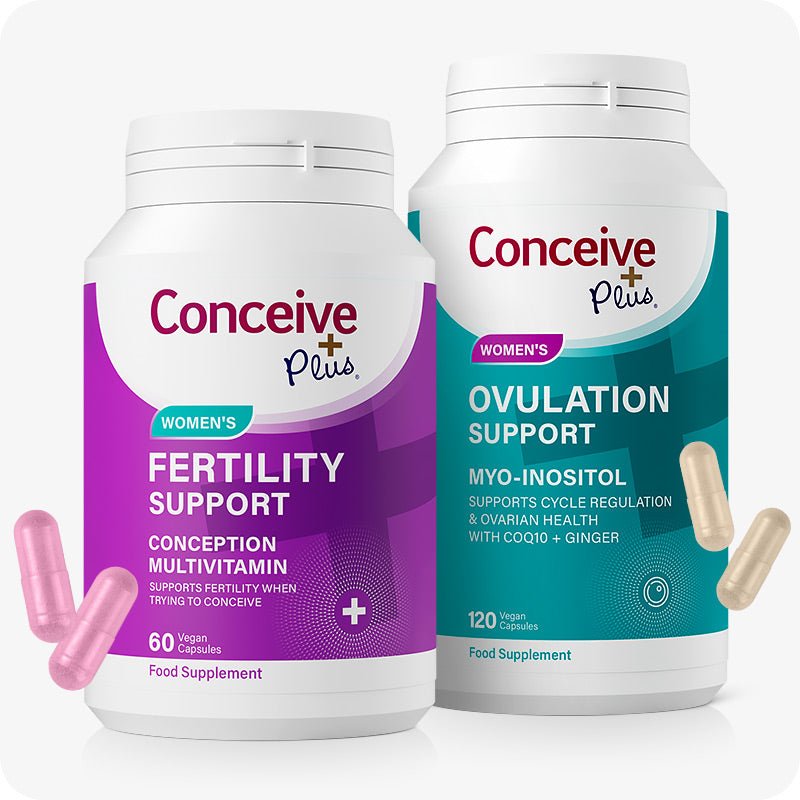
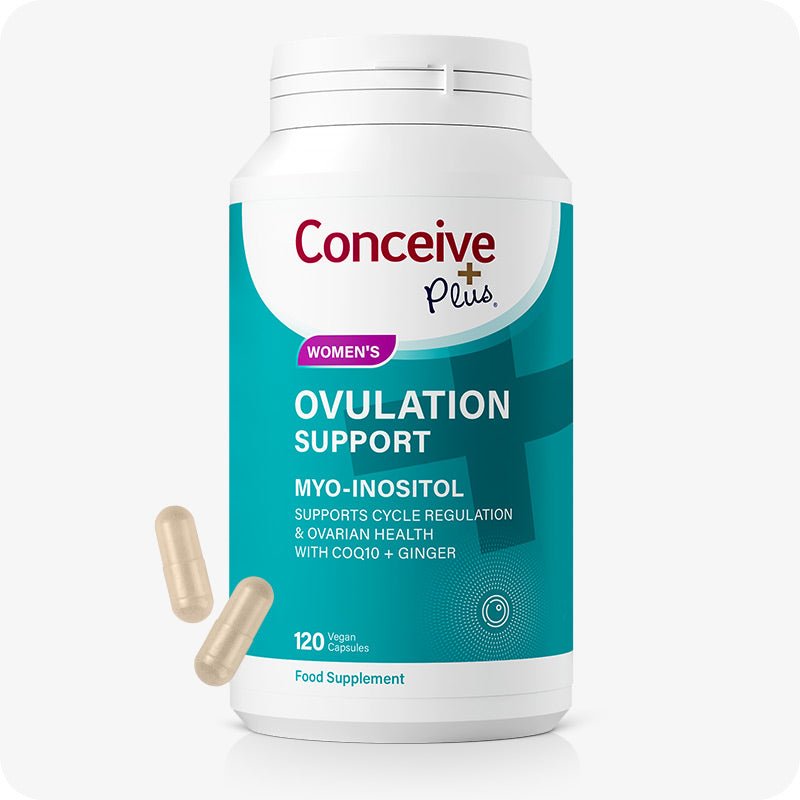
Conceive Plus Ovulation Support is formulated with myo-inositol, folate, and other nutrients shown in clinical research to support cycle regularity and hormonal balance in women with PCOS.
Inositol for PCOS: What the Evidence Shows
Myo-inositol (MI) and D-chiro-inositol (DCI) are naturally occurring sugar alcohols that play a central role in insulin signal transduction. In PCOS, there appears to be a defect in inositol metabolism and cellular signalling that contributes to insulin resistance. Supplementing inositol—particularly myo-inositol—has become one of the best-evidenced nutritional interventions for PCOS fertility.
Key findings from research on inositol and PCOS:
- A 2017 randomised controlled trial comparing myo-inositol to metformin in women with PCOS found equivalent improvements in hormonal profiles, ovulatory frequency, and pregnancy rates, with better tolerability for inositol (fewer gastrointestinal side effects)
- Multiple studies show myo-inositol reduces fasting insulin, testosterone, and LH, while improving FSH ratios and ovulation rates
- The European consensus on inositol in obstetrics and gynaecology recommends myo-inositol supplementation for women with PCOS who wish to conceive
- The optimal ratio of myo-inositol to D-chiro-inositol appears to be 40:1, reflecting the physiological ratio found in follicular fluid
- Doses used in studies typically range from 2,000–4,000 mg of myo-inositol daily
Inositol is safe, well-tolerated, and available without prescription. It is particularly useful for women with PCOS who are awaiting referral to a fertility clinic, or who wish to try natural approaches before or alongside medical treatment.
Conceive Plus Ovulation Support contains myo-inositol at an evidence-based dose, alongside folate, vitamin D, and other cycle-supporting nutrients. It's formulated for women trying to conceive and specifically relevant for those with PCOS.
Medical Treatments for PCOS-Related Infertility
For women who don't conceive with lifestyle modification and supplementation, a range of effective medical treatments are available. A fertility specialist or gynaecologist will guide you through these based on your specific situation.
Letrozole (First-Line Ovulation Induction)
Letrozole (an aromatase inhibitor) is now the first-line medication for ovulation induction in women with PCOS in most clinical guidelines, having replaced clomiphene citrate. Letrozole works by temporarily reducing oestrogen, which causes the pituitary to release more FSH and stimulate follicle development. Clinical trials show letrozole achieves higher live birth rates than clomiphene in women with PCOS.
Clomiphene Citrate
An older medication that works by blocking oestrogen receptors, causing increased FSH release. It was the standard ovulation induction agent for decades and remains effective, though letrozole has largely replaced it as first-line in PCOS. Around 70–85% of women with PCOS ovulate on clomiphene, and 30–50% conceive within 6 cycles.
Metformin
A diabetes medication that improves insulin sensitivity and reduces androgen production in PCOS. It can restore ovulation in women with PCOS, particularly those with marked insulin resistance. May be used alone or in combination with letrozole or clomiphene. Can cause gastrointestinal side effects, particularly at higher doses.
Gonadotropin Injections
FSH or LH/FSH injections directly stimulate the ovaries to develop follicles. Highly effective but require careful monitoring due to the risk of ovarian hyperstimulation syndrome (OHSS) and multiple pregnancy. Used when oral medications haven't been successful.
Laparoscopic Ovarian Drilling (LOD)
A surgical procedure in which small holes are made in the ovaries using laser or diathermy. This reduces androgen-producing tissue and can restore ovulation in women with PCOS resistant to medication. The benefit tends to last for 12–18 months. Not widely offered as first-line, but remains an option.
IVF
In vitro fertilisation is recommended when other treatments have not been successful, when there are additional factors (tubal disease, male factor), or sometimes when multiple embryos want to be screened before transfer. Women with PCOS need careful management during IVF due to elevated OHSS risk.
PCOS, Miscarriage Risk, and Pregnancy Care
Women with PCOS have a modestly elevated risk of miscarriage—approximately 30–50% compared to 10–15% in the general population. The reasons are not entirely clear but may relate to elevated androgens, insulin resistance affecting endometrial receptivity, and egg quality. Most women with PCOS do go on to have successful pregnancies.
During pregnancy, PCOS is associated with:
- Higher risk of gestational diabetes (approximately 3x general population)
- Increased risk of pregnancy-induced hypertension and pre-eclampsia
- Slightly elevated risk of preterm birth
These risks mean that women with PCOS should ideally optimise their weight, blood glucose control, and metabolic health before and during pregnancy. Close monitoring by a midwife or obstetrician with PCOS experience is recommended.
Mental Health and PCOS
PCOS is significantly associated with elevated rates of anxiety, depression, and reduced quality of life. Facing fertility challenges, managing symptoms like excess hair and acne, and the uncertainty of a chronic condition create a real psychological burden. This is not a trivial consideration: mental health affects hormonal health, adherence to treatment, and relationship quality.
Seeking psychological support—whether through your GP, a therapist experienced in chronic illness, or PCOS-specific support communities—is as important as the physical aspects of management. PCOS Europe and Verity (UK) are examples of patient support organisations offering resources and community.
Frequently Asked Questions About PCOS and Fertility
Can I get pregnant naturally with PCOS?
Yes. Many women with PCOS conceive naturally, particularly those with milder forms of the syndrome who still ovulate occasionally. Women with irregular cycles who do sometimes ovulate may simply need to identify their fertile window more precisely. For those who are anovulatory, ovulation induction medications are highly effective.
How long does it take to get pregnant with PCOS?
This varies widely depending on severity of anovulation, other fertility factors, treatment chosen, and individual response. Women who respond to first-line ovulation induction (letrozole or clomiphene) often conceive within 3–6 treatment cycles. Women requiring more complex treatment may take longer. Most women with PCOS who receive appropriate treatment do eventually conceive.
Does inositol really help with PCOS fertility?
Yes, the evidence is strong. Multiple randomised controlled trials and meta-analyses show myo-inositol improves insulin sensitivity, reduces androgens, increases ovulation frequency, and improves pregnancy rates in women with PCOS. It is particularly useful as an adjunct to lifestyle changes and as a first-line approach before medication.
What is the best diet for PCOS fertility?
A low glycaemic index, anti-inflammatory diet rich in vegetables, whole grains, legumes, lean protein, and omega-3 fats. Reducing refined carbohydrates and processed foods is particularly impactful for women with insulin-resistant PCOS. No single "PCOS diet" is universally agreed upon, but these principles have the strongest evidence.
Will losing weight cure PCOS?
PCOS is a lifelong condition—it doesn't disappear with weight loss. However, significant weight loss (≥5–10% of body weight in overweight women) dramatically improves symptoms, hormonal profiles, and fertility. Many women see restoration of ovulation with weight loss alone, without medication.
Can PCOS cause miscarriage?
PCOS is associated with a modestly elevated miscarriage risk—approximately 30–50% vs 10–15% in the general population. This may relate to elevated androgens, insulin resistance, or egg quality. Optimising metabolic health and taking adequate folate before conception can help reduce this risk.
Is IVF the only option if I have PCOS?
No. Most women with PCOS don't need IVF to conceive. Oral ovulation induction agents like letrozole are highly effective first-line treatments. IVF is typically reserved for cases where simpler treatments haven't worked, or when other fertility factors are present. Women with PCOS who do undergo IVF need careful management due to the elevated risk of ovarian hyperstimulation.
What supplements should I take for PCOS and fertility?
The best-evidenced supplements for PCOS include myo-inositol (2,000–4,000 mg/day), vitamin D (particularly if deficient), omega-3 fatty acids, and folate. Conceive Plus Ovulation Support combines myo-inositol with folate and other cycle-supporting nutrients in a formulation designed for women trying to conceive.
Can PCOS be managed without medication?
For many women—particularly those with milder PCOS—lifestyle changes including dietary modification, regular exercise, and supplements like inositol can significantly improve hormonal balance and restore ovulation without medication. For those with more severe anovulation, medication is usually needed for fertility, though lifestyle modification remains important alongside it.
Does Conceive Plus Ovulation Support help with PCOS?
Yes. Conceive Plus Ovulation Support contains myo-inositol, folate, vitamin D, and other nutrients with evidence for supporting cycle regularity and hormonal balance in women with PCOS. It is a non-prescription supplement designed as part of a comprehensive approach to fertility support. It is not a replacement for medical treatment in severe PCOS but complements lifestyle changes and ovulation induction treatment.
PCOS Fertility Support—Available Across Europe
Conceive Plus Ovulation Support is available to customers across the EU—formulated with myo-inositol and fertility-supporting nutrients to help women with PCOS work towards their family goals.