Understanding Your Menstrual Cycle: The Ultimate Guide to Your Fifth Vital Sign


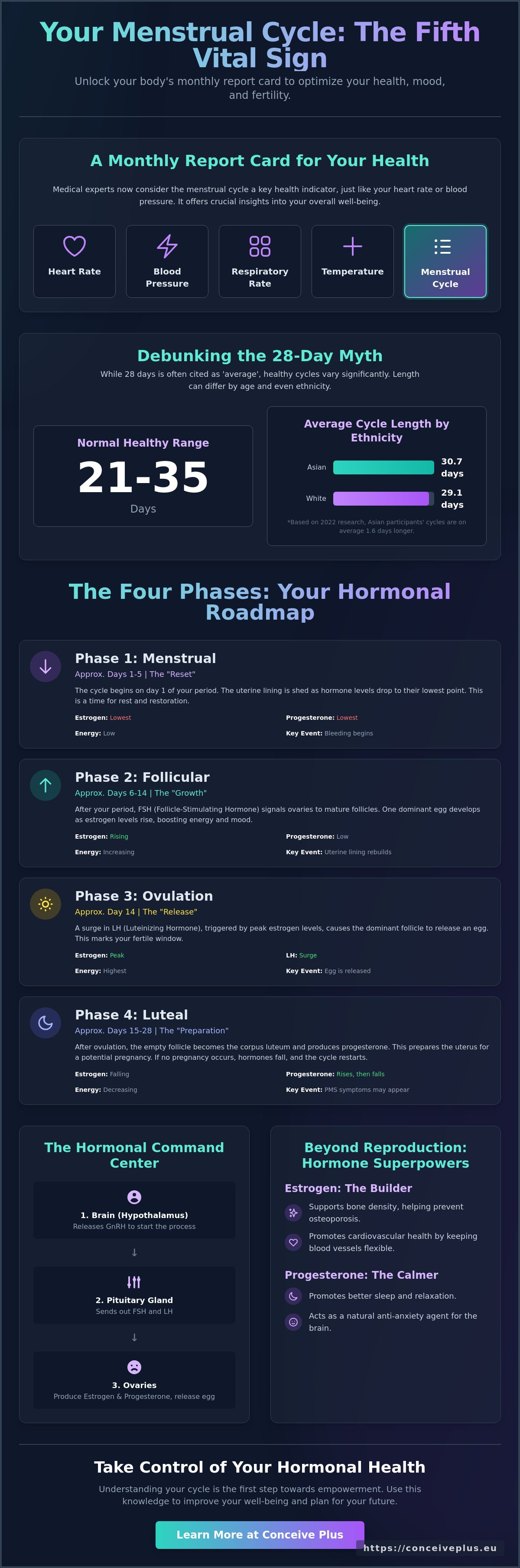
What if your period wasn't just a monthly inconvenience, but a vital report card for your entire body? Most of us are taught to expect a perfect 28-day cycle, yet research from 2022 shows that length varies significantly by age and ethnicity. For instance, Asian participants average a 30.7-day cycle, which is 1.6 days longer than White participants. If you've felt confused by irregular timing or frustrated by mood swings that seem to come out of nowhere, you're not alone. Understanding your menstrual cycle is about more than just predicting your next period; it's about recognizing what health experts now call your fifth vital sign.
You deserve to feel in control of your hormonal health rather than being at its mercy. We'll show you how to decode every phase of your cycle to better manage PMS symptoms and accurately identify your fertile window for pregnancy planning. This guide provides a clear roadmap to your body's inner workings, covering everything from the latest trends in brain-first cycle tracking to the impact of new 2026 safety regulations on the products you use every day. By the end, you'll have the tools to transform your cycle from a mystery into a powerful health asset.
Key Takeaways
- Discover why your cycle is considered a "fifth vital sign" and how hormonal shifts directly influence your skin, mood, and energy.
- Learn to navigate the four distinct phases of your cycle, from the restorative menstrual phase to the high-energy follicular phase.
- Gain confidence in understanding your menstrual cycle by debunking the 28-day myth and learning what a healthy flow actually looks like.
- Master the art of tracking your body's natural signals, such as cervical mucus changes, to accurately predict your period start date.
- Identify your unique six-day fertile window to optimize your timing for pregnancy and improve your overall reproductive awareness.
Why Your Menstrual Cycle is Your "Fifth Vital Sign"
Many people view their period as a monthly burden or simply a sign they aren't pregnant. However, medical professionals are increasingly viewing the menstrual cycle as a "fifth vital sign," alongside blood pressure, heart rate, temperature, and respiratory rate. This shift in perspective means your cycle serves as a monthly report card for your general health. While some sources focus only on reproductive preparation, understanding your menstrual cycle reveals deeper insights into your thyroid function, metabolic health, and even your bone density.
It's vital to distinguish between menstruation and the menstrual cycle. Menstruation is the three to seven days of bleeding, while the menstrual cycle is the entire rhythmic process occurring throughout the month. This process is driven by a complex interplay of hormones that affect nearly every system in your body, from your brain to your skin. Tracking these changes is essential even if you aren't trying to conceive, as it allows you to identify health red flags early.
To better understand how your cycle functions as a unique health indicator and "superpower," watch this insightful video:
The Hormonal Feedback Loop
The foundation of your cycle is the Hypothalamic-Pituitary-Ovarian (HPO) axis. This is a sophisticated communication network where your brain speaks to your ovaries using chemical messengers. The hypothalamus releases gonadotropin-releasing hormone, which prompts the pituitary gland to send out follicle-stimulating hormone (FSH) and luteinizing hormone (LH). These signals tell the ovaries when to produce estrogen and when to release an egg. A healthy menstrual cycle serves as a baseline indicator that your body's communication systems and endocrine health are functioning correctly. For a comprehensive overview of the menstrual cycle and its biological controls, reviewing the underlying anatomy can help clarify these internal signals.
Beyond Reproduction: Cycle Benefits
Hormones like estrogen and progesterone do much more than prepare a womb. Estrogen is a powerhouse for bone density, helping to prevent osteoporosis, and it supports cardiovascular health by keeping blood vessels flexible. Progesterone acts as a natural "chill pill" for the brain; it converts into a neurosteroid that promotes better sleep and reduces anxiety. When a period goes missing or becomes highly irregular, it's rarely just an "ovary problem." Instead, it's often the body's way of signaling that something is wrong with your stress levels, nutrition, or thyroid function. Understanding your menstrual cycle gives you a head start on identifying these issues long before they become chronic conditions.
The Four Phases of Your Menstrual Cycle: A Hormonal Roadmap
Thinking of your cycle as a simple countdown to your period misses the complex biological dance happening inside you. Understanding your menstrual cycle requires looking at it as a four-part roadmap where each phase has a specific job. While the textbook says a cycle lasts 28 days, a Normal menstrual cycle can actually range from 21 to 35 days. The process begins on Day 1, the first day of your period, when the uterine lining sheds because hormone levels have hit their lowest point. This phase typically lasts five days, acting as a reset for your reproductive system.
Following the reset, your body enters a period of growth and preparation. Each phase is defined by shifting levels of estrogen and progesterone, which don't just affect your fertility; they influence your metabolism, sleep, and mental clarity. By mapping these phases, you can stop guessing why your energy levels fluctuate and start working with your body's natural rhythms.
From Menses to Ovulation
As your period ends, you enter the follicular phase. Your pituitary gland releases Follicle-Stimulating Hormone (FSH), which tells your ovaries to start maturing a handful of follicles. Eventually, one "lead" egg becomes dominant, while the others are reabsorbed. During this time, estrogen levels climb, thickening the uterine lining and boosting your physical energy. If you're trying to time this peak energy and fertility, using an ovulation calculator can help you pinpoint when the luteinizing hormone surge will trigger the 24-hour ovulatory window. This brief phase is the only time pregnancy can occur, making it the most critical part of the roadmap for those trying to conceive.
The Luteal Phase and the Corpus Luteum
After ovulation, the empty follicle doesn't just disappear; it transforms into a temporary gland called the corpus luteum. This gland produces progesterone, which is vital for stabilizing the uterine lining. A healthy luteal phase should last at least 10 to 14 days. If it's shorter, it's often called a luteal phase defect, which can make it difficult for a fertilized egg to implant properly. Many people experience mood shifts, breast tenderness, or bloating during this time as progesterone rises and then falls. If you want to support your health with Conceive Plus Europe during these shifts, paying attention to these phase-specific symptoms is the first step toward better hormonal balance. When progesterone levels drop at the end of this phase, it signals the body to begin the cycle again.
Is My Cycle Normal? Decoding Regularity, Flow, and Symptoms
Understanding your menstrual cycle begins with letting go of the idea that a 28-day cycle is the only "right" way to menstruate. While many apps default to this standard, research shows that actual cycle lengths vary widely based on age, race, and ethnicity. A November 2022 study found that cycle length differs significantly among populations; for instance, Asian participants averaged 30.7 days, which is 1.6 days longer than White participants. As long as your cycle consistently falls between 21 and 35 days, your body is likely operating within a healthy range.
Flow volume is another critical health metric that many people find difficult to quantify. A "normal" amount of blood loss is generally considered to be between 30ml and 80ml per cycle. If you're soaking through a pad or tampon every hour for several hours, or if you regularly pass clots larger than a quarter, you've likely exceeded the 80ml threshold. It's also vital to distinguish between a true period and mid-cycle spotting. Day 1 of your cycle is the first day of a consistent, full flow that requires a menstrual product, not just a few drops of light spotting or "old" brown blood.
Identifying Cycle Irregularities
A period is typically considered late if it hasn't started five or more days after you expected it. Minor variations are common; factors like high-intensity exercise, sudden weight changes, or a particularly stressful week can delay ovulation and push back your start date. However, if your flow is consistently excessive, you may be experiencing menorrhagia, a clinical term for menstrual bleeding that lasts longer than seven days or is heavy enough to soak through one or more pads every hour. This condition is a clinical concern because it can lead to anemia and often points to underlying hormonal imbalances or uterine issues.
The Red Flags You Shouldn't Ignore
While small shifts are normal, certain patterns warrant a conversation with your healthcare provider. If your cycle length changes by more than seven to nine days over three consecutive months, it's a sign your hormones aren't reaching the necessary thresholds for a stable rhythm. Pain that leaves you unable to work or attend school shouldn't be dismissed as just "part of being a woman." Intense pelvic pain can be a red flag for conditions like endometriosis or fibroids. Since your cycle is a key indicator of reproductive health, identifying these issues early is crucial, especially if you're looking into fertility products to plan for a future pregnancy. Understanding your menstrual cycle means knowing when your body is signaling for help so you can address problems before they impact your overall well-being.
How to Track Your Cycle for Health and Empowerment
Tracking your cycle is more than just circling a date on a calendar. It is a process of gathering biological data that reveals how your hormones are performing in real time. While simple apps often guess your next period based on averages, understanding your menstrual cycle through physical markers provides a much clearer picture of your health. By 2026, advanced "FemTech" tools like the Samphire app have begun taking a "brain-first" approach, connecting these physical symptoms to your cognitive and emotional well-being. To get started, you need to observe four key indicators over a period of three to six months to identify your unique patterns.
- Step 1: Mark Day 1. This is the first day you experience a full, consistent flow. Spotting doesn't count as the start of a new cycle.
- Step 2: Check Cervical Mucus. This fluid changes texture as estrogen rises, signaling your fertile window.
- Step 3: Measure Basal Body Temperature (BBT). Your resting temperature shifts after ovulation, confirming that an egg was released.
- Step 4: Use LH Strips. These tests detect the surge in Luteinizing Hormone that happens 24 to 36 hours before ovulation.
- Step 5: Analyze the Luteal Phase. Ensure the time between ovulation and your next period is at least 10 days to support a healthy pregnancy.
The Science of Cervical Mucus
As you move out of the menstrual phase, your estrogen levels begin to climb. This hormonal shift changes the consistency of your cervical mucus from dry or sticky to a "creamy" texture. As you approach ovulation, the fluid becomes clear, slippery, and stretchy, much like a raw egg white. This "egg-white cervical mucus" is biologically essential because it protects sperm and helps it swim through the cervix. If you never see this stretchy fluid, it could indicate low estrogen levels or a need for better hydration. Categorizing what you see each day helps you predict your most fertile days with high accuracy.
Basal Body Temperature (BBT) Explained
Your Basal Body Temperature is your body's temperature when you are completely at rest. To track this accurately, you must take your temperature immediately upon waking, before you even sit up in bed. After ovulation occurs, the corpus luteum releases progesterone, which causes a slight but distinct rise in your resting temperature, usually by 0.5 to 1 degree. When you plot these daily readings on a chart, you should see a "biphasic" pattern; lower temperatures before ovulation and higher temperatures after. This shift is the only way to confirm that ovulation actually took place. If your chart stays flat or the high-temperature phase is too short, it may signal a luteal phase defect. To take the guesswork out of your tracking and support your hormonal journey, you can explore specialized tools for reproductive health that align with your body's natural signals.
Taking the Next Step: Using Cycle Knowledge for Fertility
Understanding your menstrual cycle transforms from a daily health habit into a strategic tool when you decide to grow your family. Many people believe that pregnancy only happens on the day of ovulation, but this narrow focus often leads to missed opportunities. In reality, you have a six-day fertile window that includes the five days leading up to the egg's release and the day of ovulation itself. By identifying this window through the tracking methods discussed earlier, you can align your efforts with your body's most receptive period.
Timing is everything because of the different lifespans of reproductive cells. While sperm can survive in the reproductive tract for up to five days when fertile cervical mucus is present, the egg has a much shorter lifespan of only 12 to 24 hours. This means the most effective strategy is to have sperm already present in the fallopian tubes before the egg is released. When you recognize the shift to "egg-white" cervical mucus, it's your signal that the fertile window has opened, even if ovulation is still a few days away.
Optimizing the Fertile Window
Successful conception depends on more than just timing; it requires a healthy environment. This is where "pre-peak" tracking becomes your best friend. By monitoring your body's signals early in the follicular phase, you can ensure you aren't missing those crucial days before the LH surge occurs. If you're currently in this phase of planning, Conceive Plus Europe fertility bundles are designed to support your body's natural processes and provide the nutrients needed for reproductive health. Combining this support with your cycle knowledge creates a powerful foundation for your fertility journey.
When to Seek Expert Fertility Advice
Standard medical advice suggests seeking help after one year of trying if you're under 35, or after six months if you're 35 or older. However, because you've been understanding your menstrual cycle as a "fifth vital sign," you may have data that suggests you should seek help sooner. If your tracking reveals that you aren't ovulating, or if your luteal phase is consistently shorter than 10 days, you don't have to wait for the standard timeline to pass. Bringing three to six months of basal body temperature charts or LH test results to your doctor can significantly speed up a clinical diagnosis. You can check out special offers on cycle support tools to help you gather the most accurate data possible. Your tracked data acts as a bridge between your daily experience and clinical care, ensuring that any hormonal imbalances are addressed quickly and effectively.
Empower Your Health with Hormonal Harmony
You've learned that your cycle is far more than just a monthly period; it's a vital sign that speaks to your cardiovascular, bone, and metabolic health. By moving beyond the 28-day myth and focusing on biological markers like cervical mucus and basal body temperature, you've gained a clearer picture of your body's unique rhythm. Understanding your menstrual cycle is the first step toward reclaiming your well-being and taking charge of your future fertility goals.
If you're ready to support your body's natural processes, consider using scientifically formulated solutions to bridge the gap. Trusted by millions of women worldwide and recommended by fertility clinics, our products are designed to help you maintain the hormonal balance your fifth vital sign deserves. Explore our range of fertility support products to balance your cycle and take the next step with confidence. Your body has been providing the data all along; now you have the power to decode it for a healthier, more empowered life.
Frequently Asked Questions
How many days is a normal menstrual cycle?
A normal menstrual cycle typically lasts between 21 and 35 days. While 28 days is often cited as the standard, only a small percentage of people actually follow this exact timeline every month. Your cycle length may vary slightly from month to month due to lifestyle factors, but staying within this window is generally considered healthy for most adults. If your cycle is consistently shorter or longer, it may indicate a hormonal shift.
Can I get pregnant on my period?
It is possible to get pregnant during your period, especially if you have a shorter cycle. Sperm can survive inside the reproductive tract for up to five days. If you have a 21-day cycle and have intercourse near the end of your bleeding, you could ovulate shortly after, allowing fertilization to occur. Understanding your menstrual cycle involves realizing that your fertile window can overlap with your period days.
What are the first signs that my period is coming?
Common early signs include breast tenderness, abdominal bloating, and mild pelvic cramping. You might also notice skin breakouts or a shift in your energy levels as progesterone drops. These physical and emotional changes, often referred to as Premenstrual Syndrome (PMS), typically appear in the few days leading up to Day 1 of your full flow. Tracking these recurring symptoms can help you predict your start date more accurately.
How do I know if I am ovulating without a test?
You can identify ovulation by observing a change in cervical mucus, which becomes clear, stretchy, and similar to raw egg whites. Some people also experience a mild, one-sided twinge in the lower abdomen known as Mittelschmerz. Other natural indicators include a heightened sense of smell, increased libido, or a slight firming of the cervix that you can feel during a self-check. These biological markers are reliable indicators of your peak fertility window.
Why is my menstrual cycle suddenly longer than usual?
A sudden increase in cycle length usually means that ovulation was delayed or didn't happen at all. Your body might pause the process due to a temporary illness, significant travel, or a change in your sleep schedule. If your cycle is suddenly longer than 35 days for more than three months, it's worth discussing with a provider to rule out conditions like PCOS or thyroid imbalances. Identifying the root cause is essential for long-term hormonal health.
Is it normal to have a 40-day menstrual cycle?
A 40-day cycle is generally considered "long" and falls outside the typical 21 to 35-day healthy range. While some people naturally have longer cycles, a 40-day rhythm often indicates irregular ovulation or a hormonal delay. If this is your consistent pattern, tracking your basal body temperature can help determine if you are ovulating later in the month or if your body is struggling to trigger the process effectively.
How does stress affect the timing of my period?
Stress impacts your period by triggering the release of cortisol, which can interfere with the signals your brain sends to your ovaries. High stress levels can delay the surge of luteinizing hormone, causing you to ovulate later than usual or skip a month entirely. This biological "pause" is your body's way of preventing pregnancy during a time it perceives as unstable. Once the stressor is removed, your cycle usually returns to its normal rhythm.
What is the difference between the follicular phase and the luteal phase?
The follicular phase is the first half of your cycle, focused on maturing an egg and building the uterine lining under estrogen's influence. In contrast, the luteal phase occurs after ovulation when progesterone becomes the dominant hormone to stabilize that lining. Understanding your menstrual cycle means recognizing that the follicular phase can vary in length, while the luteal phase is usually a fixed 10 to 14 days. This stability is key for maintaining a healthy pregnancy.